
Safety Is a Daily Habit, Not a One-Time Setup
Fire safety on any active site, whether it is a construction project, a warehouse, or an occupied commercial building, is rarely undone by a single dramatic failure. More often it erodes gradually, through small shortcuts that build on one another until a hazard finally has room to develop. Maintaining fire safety is less about installing the right equipment once and more about consistently practising the habits that keep that equipment and those procedures effective every single day.
This daily discipline requires dedicated oversight to ensure nothing slips through the cracks, especially when primary prevention systems are offline or undergoing maintenance. Professional monitoring services, like The Fast Fire Watch Company, help bridge these operational gaps by providing trained personnel who actively patrol the premises, monitor for early warning signs, and ensure full compliance with local codes. Integrating this level of vigilant supervision into your routine transforms passive safety plans into an active, dependable line of defense.
Keep Egress and Equipment Accessible
Clear exits are one of the simplest and most frequently overlooked safety measures. Materials, equipment, and debris have a way of migrating toward hallways and stairwells over the course of a busy day, and every site benefits from a routine check to keep those paths clear. The same goes for fire extinguishers, pull stations, and hose connections, which need to remain visible and unobstructed rather than boxed in behind stored materials.
Stay Ahead of Housekeeping and Storage
Combustible accumulation is one of the most preventable fire hazards on any site. Wood scraps, cardboard, packaging, and oily rags left in open containers or piled near heat sources add fuel that would not otherwise exist. Designated, fire-resistant storage for flammable substances, along with covered metal receptacles for combustible waste, removes much of this risk before it ever becomes a problem. Housekeeping should be treated as a fire prevention task, not just a tidiness issue.
Maintain Systems and Document Everything
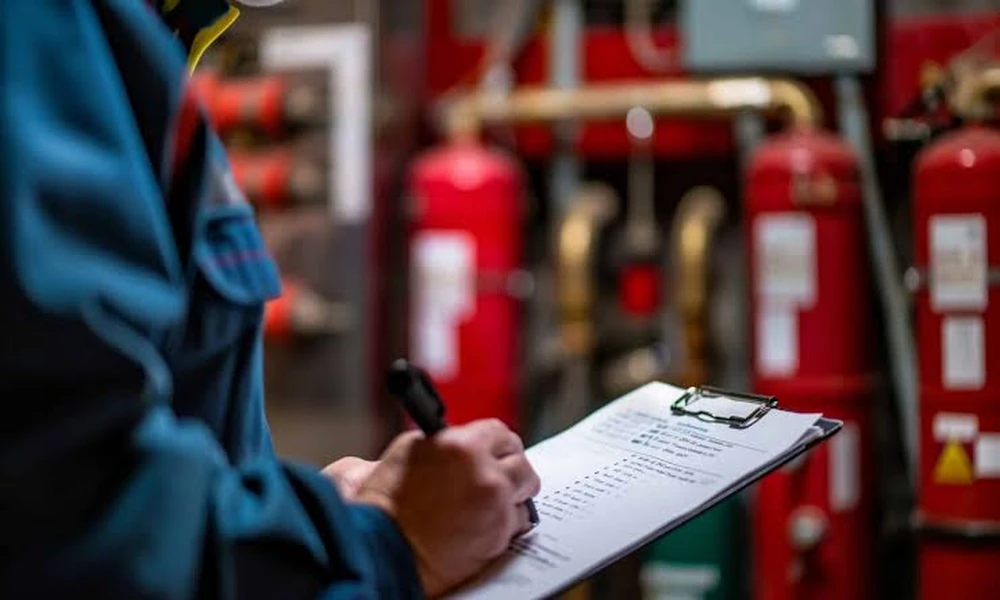
Fire alarms, sprinklers, and extinguishers only work if they are inspected on schedule and repaired the moment a defect appears. Electrical systems deserve the same attention, since overloaded circuits, exposed wiring, and ageing equipment remain among the most common ignition sources on any site. Every inspection, repair, permit, and fire watch patrol should be documented, since that written record is what proves a site was actually being managed safely if questions ever arise later.
Hot work deserves its own layer of discipline, including a written permit system, a cleared radius around the work area, and a fire watch during and immediately after the activity to catch any delayed ignition.
Train, Drill, and Review
Regular fire drills reveal gaps in a response plan that no amount of paperwork will catch on its own. Reviewing and updating the site’s fire prevention plan whenever conditions change, not just once a year on a fixed schedule, keeps the plan matched to the actual hazards present. Training every worker, not only designated safety staff, to recognise hazards and know the evacuation route builds a much wider safety net than relying on a single role.
Final Thoughts
Maintaining fire safety on site comes down to consistency: clear paths, disciplined housekeeping, well-maintained systems, thorough documentation, and a workforce that has actually practised what to do. None of these individually guarantees safety, but together they close most of the gaps that allow a small hazard to grow into a serious fire.