
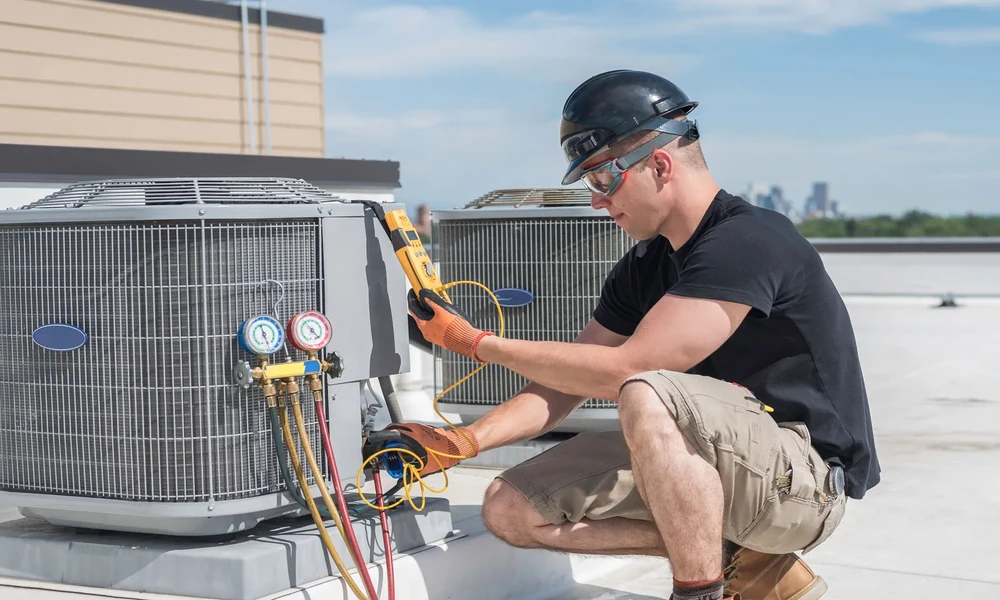

Northland summers may be shorter than those farther south, but humidity and occasional heat waves still make reliable cooling essential. Choosing the right air conditioning system for your home means balancing comfort, efficiency, and the unique demands of northern Minnesota’s climate. Getting the selection process right starts with understanding your house and matching equipment to real conditions rather than generic rules of thumb. Professional air conditioning installation for Northland homes ensures the system is sized and set up correctly from day one.
The right AC does more than drop the temperature. It manages moisture, runs efficiently during the limited cooling season, and works in harmony with your heating system through long winters.
Understand Your Home’s Cooling Load
Every house has a specific cooling load based on size, insulation levels, window orientation, air leakage, and local design temperatures. In northern Minnesota, cooling design temperatures are lower than in the Twin Cities, and annual cooling hours are relatively modest. Oversizing is a common mistake. A unit that is too large cools the air quickly but fails to run long enough to remove humidity, leaving the home clammy. Undersizing leads to constant operation and poor comfort on hotter days.
A proper load calculation, following industry standards such as Manual J, accounts for these factors instead of relying solely on square footage. Older Northland homes often have different insulation and air-sealing characteristics than newer construction, so the calculation matters even more.
Key Features That Matter in the Northland Climate
Focus on performance traits that deliver real value in a heating-dominated climate with humid summers.
- Right-sized capacity: Match the system to the calculated load rather than rounding up.
- Humidity control: Two-stage or variable-speed compressors run longer at lower speeds, removing more moisture.
- Efficiency ratings: In northern climates the federal minimum SEER2 is lower than in warmer regions. A mid-range efficiency unit often provides the best balance of cost and savings because cooling hours are limited.
- Quiet operation and reliability: Look for units built for durable performance through temperature swings.
- Compatibility with existing ductwork or the option for ductless systems: Many Northland homes have older duct systems that may need evaluation.
Variable-speed technology stands out for humidity control and steady temperatures. Single-stage units are simpler and less expensive but cycle more abruptly.
Central Air, Ductless Mini-Splits, or Heat Pumps
Central air conditioning remains the most common whole-house solution when ductwork is in good condition. It delivers even cooling and pairs easily with a furnace.
Ductless mini-splits excel in homes without ducts, additions, or rooms that are hard to cool. Modern cold-climate models also provide efficient heating in milder weather. They offer zone control so you cool only occupied spaces.
Cold-climate heat pumps have improved dramatically. Many maintain useful capacity well below freezing and can serve as the primary cooling system while handling a portion of the heating load. In deeper cold they typically switch to or work alongside a gas furnace in a dual-fuel setup. This hybrid approach is increasingly practical for Northland homes seeking better efficiency without sacrificing reliability.
The best choice depends on your existing heating system, duct condition, budget, and long-term energy goals. A heat pump that also cools may reduce the need for a separate air conditioner in some cases.
Common Mistakes to Avoid
Homeowners sometimes select equipment based only on the lowest price or the highest efficiency number. High SEER2 ratings deliver greater savings in hot climates with long cooling seasons. In the Northland the payback period lengthens, so a well-built mid-efficiency unit often makes more sense.
Skipping a load calculation or failing to evaluate ducts leads to poor performance and higher energy use. Ignoring humidity needs leaves the house feeling sticky even when the thermostat is satisfied. Finally, pairing a new outdoor unit with an incompatible indoor coil or outdated controls can limit efficiency and lifespan.
Practical Steps for Selecting and Installing the Right System
Start by having a qualified technician perform a load calculation and inspect the existing ductwork or installation locations. Review efficiency options against your actual usage patterns and local utility rates. Consider how the new cooling system will interact with your heating equipment. Ask about warranties, expected maintenance, and noise levels.
Once the equipment is chosen, proper installation is critical. Correct refrigerant charge, airflow, and drainage make the difference between a system that performs as designed and one that struggles. Schedule regular maintenance so filters stay clean and coils remain efficient.
Conclusion
Selecting the ideal AC system for your Northland home comes down to accurate load calculations, strong humidity management, and equipment matched to local weather patterns rather than generic recommendations. Whether you choose central air, a ductless mini-split, or a cold-climate heat pump, the right air conditioning system will keep your Northland home comfortable through humid summer days while working efficiently alongside your heating equipment.
Proper sizing and professional installation protect your investment and maximize performance for years to come. Take the time to evaluate your options carefully, and you will enjoy dependable cooling that truly fits the needs of your Northland home without unnecessary expense or frustration.