
Walk through almost any residential area this summer and one thing quickly becomes obvious.
Garden fencing is changing.
Not dramatically. You won’t suddenly see every homeowner replacing traditional timber with something completely different. Instead, the changes are quieter. People are becoming more selective about the materials they choose, how fencing fits into the overall garden and, perhaps most importantly, how long it’s likely to last.
After decades installing fencing across Leeds and West Yorkshire, I’d say homeowners are making more informed decisions than ever before.
They’re asking better questions.
Rather than simply choosing the cheapest fence panels available, many now want to understand how different styles perform in real gardens, through real Yorkshire winters, not just how they look on the day they’re installed.
If you’ve recently searched for fence company near me, you’ve probably already noticed the sheer number of options available. Some deserve their popularity. Others look fantastic online but aren’t always the right choice once British weather gets involved.
Contemporary Doesn’t Always Mean Better
Social media has had a huge influence on garden design.
Platforms are full of perfectly photographed outdoor spaces featuring sleek horizontal slatted fencing, porcelain patios and minimalist planting.
Some of those gardens genuinely look stunning.
The problem is they aren’t always built for the conditions we experience here.
I’ve seen homeowners spend thousands recreating a modern garden they saw online, only to discover their new fencing catches every gust of wind because the property sits on an exposed hillside.
Good fencing starts with the location, not the latest trend.
One thing I see often on local jobs is customers arriving with dozens of inspiration photos before we’ve even looked at the garden itself.
The first thing I do is forget the photographs for a minute and look at the site.
Which direction does the wind come from?
Does water sit against the boundary?
Is the ground solid or heavy clay?
Those questions matter far more than the colour of the fence.
Slatted Fencing Continues To Grow
There’s no getting away from it.
Horizontal slatted fencing is probably the biggest design trend this summer.
It creates clean lines, allows light to pass through and works particularly well in contemporary gardens.
Installed properly, it can completely change the appearance of an outdoor space.
But there’s something people don’t always realise.
Slatted fencing needs more precision than traditional panel systems.
Small errors become obvious very quickly.
If the posts aren’t perfectly aligned, the eye picks it up immediately.
The same applies to spacing.
Even slight inconsistencies stand out.
I’ve repaired several slatted installations where nothing was technically broken, yet the overall appearance just looked…off.
Usually because the groundwork hadn’t been given enough attention.
Fence installation has always been about accuracy.
Modern styles simply make poor workmanship easier to spot.
Natural Timber Still Leads The Way
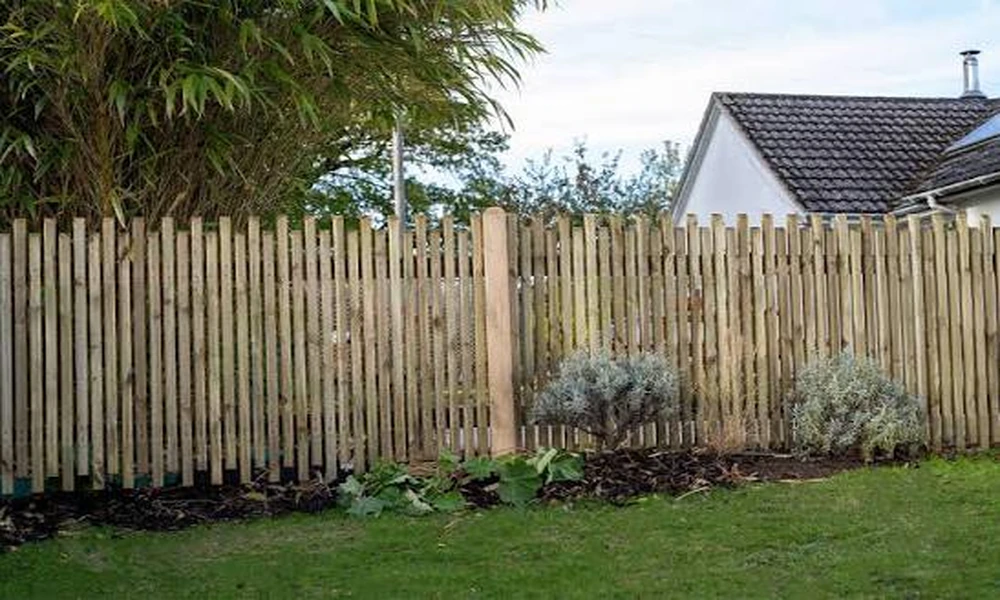
Despite the rise of modern designs, timber remains the most popular choice by a considerable margin.
And honestly, that doesn’t surprise me.
Timber belongs in British gardens.
It softens over time.
It works alongside planting.
It suits both traditional and modern properties.
The biggest difference today is the quality of finish people expect.
Years ago, many homeowners accepted weathered grey fencing as part of garden life.
Now they actively maintain it.
Light stains have become particularly popular because they protect the timber while allowing the grain to remain visible.
People seem to want fencing that looks cared for without looking manufactured.
It’s a subtle difference, but it changes the feel of the whole garden.
Privacy Is Driving Design Decisions
If there’s one request that’s increased more than any other, it’s privacy.
Homeowners aren’t necessarily asking for taller fencing.
They’re asking for smarter privacy.
There’s a difference.
Rather than creating enclosed gardens surrounded by solid timber, many now combine fencing with planting, decorative screens and carefully positioned shrubs.
The result feels much softer.
It also avoids making relatively small gardens feel boxed in.
Many homeowners looking for fencing services start by talking about replacing old fence panels.
Ten minutes later, the conversation has shifted towards how they actually use the garden.
Where do they sit in the evening?
Which neighbour overlooks the patio?
Where does the afternoon sun fall?
Those answers usually determine the fencing style far more effectively than browsing catalogues ever could.
Composite Fencing Keeps Gaining Ground
Composite fencing isn’t replacing timber.
It’s sitting alongside it.
That’s probably the best way to describe what’s happening.
Homeowners like the reduced maintenance.
They like the consistent appearance.
They like not having to repaint or stain every couple of years.
The composite fencing cost still causes plenty of conversations though.
It’s a significant investment compared with standard timber fencing.
For some gardens it’s absolutely worthwhile.
For others, quality timber still offers the better balance.
One mistake I occasionally see is people choosing composite because they think it’ll solve every maintenance problem.
It won’t.
Poor installation is still poor installation.
Expansion gaps still matter.
Ground movement still affects posts.
A premium material doesn’t compensate for rushed workmanship.
Gardens Are Becoming Outdoor Rooms
The days when gardens were simply somewhere to mow the lawn are disappearing.
People eat outside more often.
They work from garden offices.
Children spend more time playing outdoors.
Families invest in pergolas, outdoor kitchens and covered seating.
Naturally, fencing has become part of that wider design.
Instead of acting purely as a boundary, it now helps define different areas within the garden.
I’ve noticed more customers asking for fencing that complements paving, lighting and planting rather than simply separating one property from another.
That’s a positive change.
Good fencing should support the overall garden, not dominate it.
The Weather Still Makes The Final Decision
Trends come and go.
British weather remains stubbornly consistent.
Every year I visit gardens where fashionable fencing has struggled simply because it wasn’t suited to the site.
Heavy clay soil around Leeds creates constant movement below ground.
Strong winter winds expose weaknesses surprisingly quickly.
Water pooling around posts shortens lifespan regardless of the material above.
One thing I always tell customers is this.
The fence you never have to think about is usually the best one.
That means solid post depth.
Good drainage.
Proper fixings.
Suitable materials.
Those things aren’t exciting.
They are, however, what keep fences standing long after trends have changed.
Colour Choices Are Becoming More Confident
Natural timber is still hugely popular, but darker finishes are appearing much more frequently.
Anthracite greys.
Deep charcoals.
Rich browns.
Used carefully, they create a striking backdrop for planting.
Used everywhere, they can make smaller gardens feel surprisingly enclosed.
This is where experience becomes valuable.
Colour isn’t just about fashion.
It changes how a garden feels.
Dark fencing often works brilliantly behind bright planting.
Light fencing reflects more sunlight into smaller spaces.
There isn’t a right answer.
Only the right answer for that particular garden.
Repairs Are Becoming More Selective
Interestingly, homeowners aren’t replacing everything quite as quickly as they once did.
They’re becoming more selective.
Instead of removing an entire boundary because two panels have failed, many now choose targeted repairs where appropriate.
That’s sensible.
Good fencing shouldn’t automatically be replaced because one section has suffered storm damage.
Fence repair near me searches tend to increase after bad weather, but quite often only isolated posts or rails actually need attention.
An experienced fencing contractor should be able to tell the difference.
Not every leaning fence needs complete replacement.
The Best Trend Isn’t A Style
After watching fashions change for years, I think the biggest trend this summer isn’t actually a particular fencing style.
It’s better decision-making.
People ask more questions.
They research materials.
They think about maintenance before buying rather than afterwards.
They’re more interested in longevity than simply finding the cheapest quotation.
That’s refreshing.
Good fencing has never been about following trends.
It’s about understanding the property, the ground beneath it and the way the garden will be used over the next decade, not just this summer.
The styles will continue to change.
There’ll be new colours, new materials and new ideas every year.
Solid workmanship, sensible installation and fencing that suits the garden have never gone out of fashion, and I doubt they ever will.