
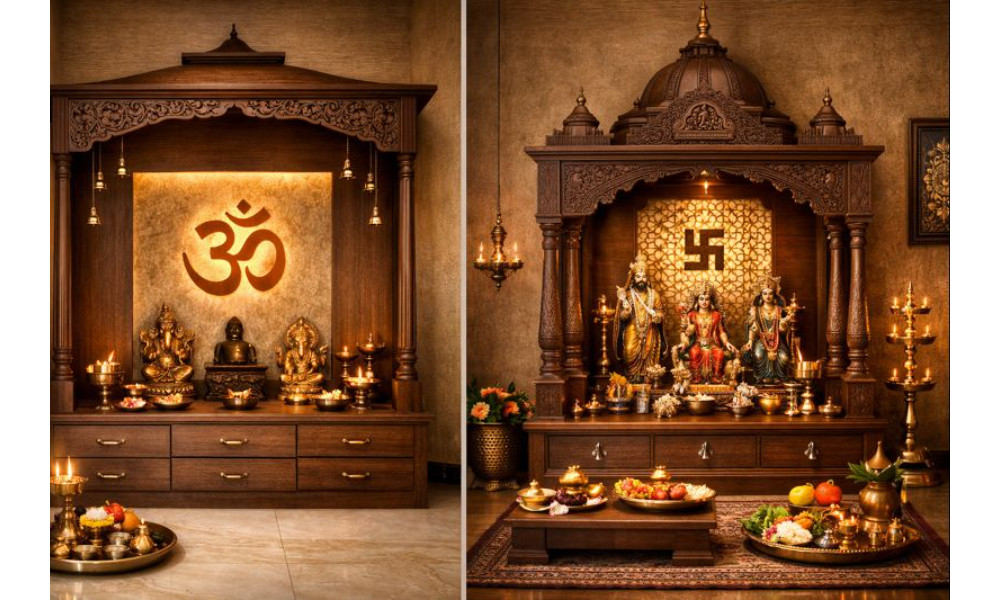

The space in which a mandir (the Hindi word for temple) is found in the Indian home is a highly spiritual space and is important emotionally. It is a place where we can focus on peace and reflection, as well as perform our daily rituals, thus the design of this area must create a sense of tranquillity and positivity. As Indian homes have advanced with contemporary designs, so too has the mandir and surrounding area been modernised, combining the traditional elements with the modern design elements.
The material selection is an essential consideration when attempting to create a harmonious and peaceful environment through the design of the mandir area. The use of the appropriate materials will help create an environment that is visually pleasing, timeless, and respectful of its purpose.
Material Selection for Peaceful Mandir Design
Creating a comfortable and grounded environment, as well as having warm tones, is a significant consideration in designing prayer spaces. A natural-looking surface (i.e., a laminate) representing the look of wood grains or earth tones provides the necessary calming background that encourages prayer and meditation. This type of finish removes the potential for visual noise, allowing for a higher level of concentration and focus during prayer.
The use of textures within a design creates depth and dimension without the use of excessive decorations or designs. In addition, by using carefully chosen materials and finishes, one can add character to an area while maintaining the softness and restraint required in a sacred area.
Why Laminates Are an Ideal Material Choice for Mandirs
As designs of modern mandirs continue to evolve, it is important to choose a material that will create balance between form and function. Due to their practicality and versatility, laminates are becoming increasingly preferred as an acceptable material for the design of pooja rooms.
Key advantages include:
- Consistent finishes on the backs, sides, tops, and bottoms of mouldings, shelves, and cabinets
- Durability against daily use, smoke from incense, and oil lamps
- Ease of maintenance and long-term visual stability
The textured finish of the laminate diffuses lighting evenly throughout the mandir area, rather than producing sharp reflections of light. This creates a tranquil atmosphere that is conducive to prayer.
Design Applications for Mandirs and Pooja Rooms
Warm tones in laminate finishes can be used throughout the mandir area to create a cohesive look, for example:
- Back sides behind idols create an additional focal point for the mandir
- Side panels or frames create a visual boundary of the sacred zone
- Shelves and drawers for diyas, incense, and religious books
- Wall-mounted mandirs that can be used in open-plan living spaces
In larger homes, tall mandir units can be enhanced by the use of vertical textures that create height and presence without taking over the space.
Lighting That Complements the Mandir Design
Lighting is a key component in establishing the spiritual experience of the pooja room. The use of soft warm LED lights, concealed lighting strips, or gentle lighting for idols or textured surfaces creates an atmosphere that feels both sacred and welcoming.
When combined with the warm textures of laminate finishes, lighting helps create a divine environment for prayer.
Achieving a Balanced Look
To achieve a unified and harmonious look in the mandir area, the following should be considered:
- Restrict the colour palette to no more than two or three warm tones
- Ensure a balance between open and closed storage in the mandir area
- Align the finishes of the mandir area with the interior design of the home, such as flooring and furniture
Royale Touche offers a premium collection of laminates that provide refined, elegant designs and durable materials that complement the spiritual elements of the mandir area.
Conclusion
Warm, thoughtfully selected materials greatly enhance the spiritual experience of individual mandirs and pooja rooms. The incorporation of textures, proportions, and lighting in a mandir results in the creation of a peaceful, serene spiritual retreat from the everyday chaos of busy lives, while remaining a vital part of modern living.