
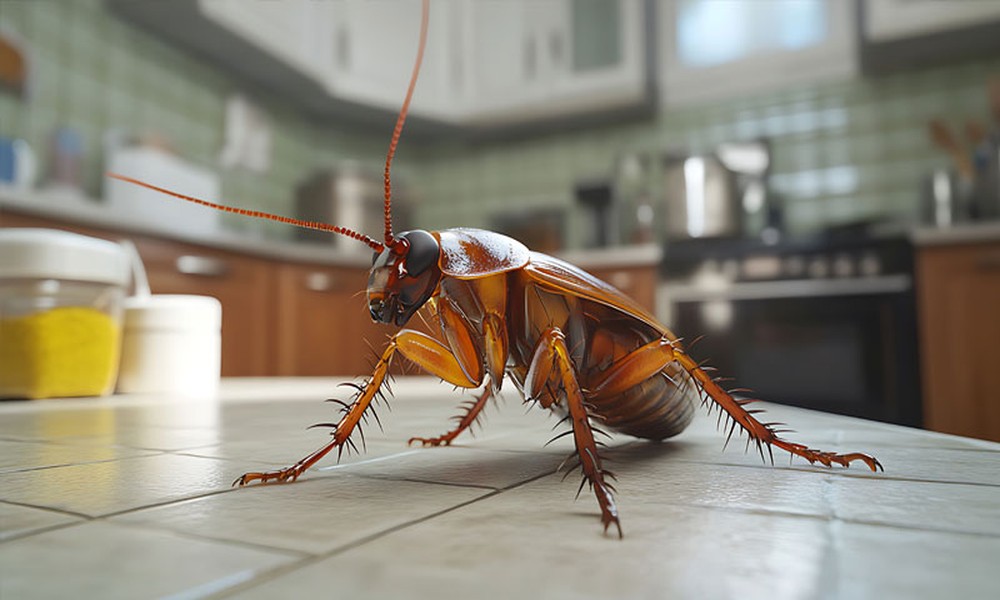

The story is consistent across the calls. A homeowner saw one cockroach in the kitchen, bought a can of spray at the grocery store, killed the cockroach, and felt like the problem was handled. A week later, three more. A bigger can of spray. A bait station from the hardware store. Another two weeks. By the time the Kansas City pest control technician shows up, the kitchen has been sprayed three or four times, the bait stations have been moved around at least once, and the cockroaches are still there. The frustration in the voice on the phone is real. The reason the spraying did not work is biological, not a failure of effort, and it is specific to the species this conversation is almost always about. German cockroaches behave differently than every other cockroach a homeowner is likely to encounter.
The Species That Acts Like Nothing Else
A German cockroach is small, light brown, with two dark parallel stripes running lengthwise behind the head. Adults reach about half an inch. They do not really fly, despite having wings. They live indoors year-round and do not survive outdoor temperatures in the Kansas City climate, which means an infestation in a local home or apartment was almost certainly introduced through a moving box, a piece of used furniture, a delivered appliance, a grocery bag, or a shared wall in a multi-unit building.
The other cockroach species seen in Kansas City homes occasionally, American cockroaches and Oriental cockroaches, behave very differently. They tend to enter from outside, prefer damp areas like basements and sewer connections, and are slower to reproduce. A homeowner who can identify the species correctly has already taken the most important first step, because the treatment that works for one of those species often fails completely against a German population.
The Reproductive Math That Defeats Spraying
A single female German cockroach can produce four to six egg cases in her adult life. Each case holds thirty to forty eggs. The female carries the case until the nymphs are nearly ready to emerge, which means the eggs are protected inside her body for most of the developmental period and are not exposed to surface sprays.
The nymphs reach reproductive maturity in roughly two months under typical indoor conditions. The population doubles every several weeks in an established infestation. A handful of cockroaches visible on the counter is almost never the actual count. The University of Kentucky Extension and the National Pest Management Association both document the ratio. For every German cockroach a homeowner sees, dozens to hundreds are hidden in cracks and voids during daylight hours.
A surface spray kills the adults that walk through the wet residue. It does not penetrate the egg cases. It does not reach the cockroaches inside wall voids, behind dishwashers, inside microwave bases, under refrigerator coils, behind cabinet kick plates, or inside the small spaces between cabinet boxes and the wall. The hidden population reproduces faster than the spray can suppress it, which is why the count seems to recover within days no matter how many times the kitchen has been treated.
Why Pyrethroid Sprays Have Stopped Working as Well
The most common active ingredients in over-the-counter cockroach sprays are pyrethroids. Cypermethrin, permethrin, deltamethrin, and several others fall into this family. These products have been the foundation of consumer cockroach control for decades, and German cockroaches have responded to that decades-long pressure the way most species under chemical pressure eventually respond. Resistance has spread across populations in the United States to the point that peer-reviewed research published in journals like Scientific Reports has documented German cockroach populations resistant to multiple classes of insecticide simultaneously.
The practical effect for a homeowner is that the same spray that worked on a German cockroach population ten years ago may produce no measurable reduction in the same kitchen today. Repeated application of the same product on the same population accelerates the resistance, because the cockroaches that survived the previous round are the ones reproducing.
What an Entomologist-Led Inspection Looks At
Effective German cockroach control begins with an inspection that goes well beyond the surfaces the homeowner has been spraying. The technician identifies the harborage areas where the population is actually living. Dishwasher interiors and motor compartments. The void behind the refrigerator coils. The hinge channels inside cabinet doors. The seams where a countertop meets the wall. The interior of toasters, microwaves, coffee makers, and similar small appliances. The wall void around plumbing penetrations under the sink. The hollow inside an old-style cabinet kick plate. Drawers, especially the rails and the back joints.
A board-certified entomologist evaluates the environmental conditions that are supporting the population. Standing moisture under the sink. A small drip from a refrigerator water line. Pet food left out overnight. Cardboard storage in pantry areas. Crumbs collecting under appliances that have not been pulled out in years. Each of these is part of why a population persists, and the treatment plan addresses each one rather than spraying around them.
How Professional Treatment Differs From What’s on the Hardware Store Shelf
Professional German cockroach treatment combines several methods that work together rather than a single product. Gel baits with active ingredients the local population is not resistant to, placed in the harborage locations identified during the inspection rather than scattered across surfaces. Insect growth regulators that interrupt the development of the nymphs that emerge from existing egg cases. Targeted application in voids and cracks rather than broad surface spraying. Vacuum removal of visible cockroaches and egg cases in heavy infestations, which reduces the population immediately and shortens the time to elimination.
Follow-up visits are part of any serious plan. A single visit, no matter how thorough, will not catch every egg case. The cockroaches that emerge from those cases need to encounter active bait or treated surfaces, which means the program runs across multiple visits spaced to match the reproductive cycle. Homeowners who have been through several rounds of failed spraying are often surprised at how quickly a well-designed program produces visible results, usually within the first two to three weeks.
When to Stop Spraying and Call
The signal to bring in professional help is straightforward. If the cockroaches are still appearing after two or three rounds of consumer-level spraying or baiting, the population is not going to be eliminated with another trip to the hardware store. The longer the cycle continues, the larger the hidden population grows and the more resistance gets reinforced.
ZipZap Termite & Pest Control handles German cockroach cases across the Kansas City metro with a board-certified entomologist on staff and a treatment approach built around the biology of the species rather than the limits of a consumer product. The work is structured, the inspection is thorough, and the results last because the program addresses the hidden population and the conditions supporting it. Reach out to schedule a Kansas City pest control inspection and find out what is actually living behind the kitchen surfaces you have been spraying.